

Stalingrad defeat hidden
The real size of the loss
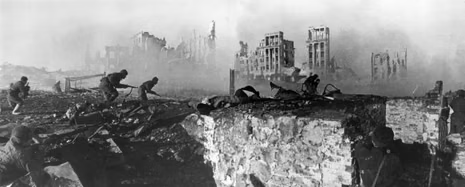
The numbers from Stalingrad were shocking. When the Soviets surrounded the German Sixth Army, parts of the Fourth Panzer Army, and other Axis allies in November 1942, there were about 300,000 men there. Around 90,000 German soldiers marched into Soviet prison camps after the battle ended on February 2, 1943. After the war, only about 6,000 of these men went back home. The rest died from hunger, illness, the cold, or were worked to death in Soviet labour camps. The Germans lost about 150,000 men and 90,000 men were taken prisoner at Stalingrad. The Axis allies lost tens of thousands more. The Soviets lost even more, with more than 1.1 million people killed, hurt, or missing. Stalingrad defeat hidden
But in early 1943, the German people didn’t hear any of these numbers. They were told instead that the Sixth Army had fought bravely and died like heroes. Joseph Goebbels ran the Nazi propaganda machine, which worked around the clock to spin this crushing defeat into a story that made it sound like a noble sacrifice. The German leaders knew that if the people found out how bad the defeat really was, they would lose faith in Hitler’s ability to win the war. So they hid the numbers, the reasons for the loss, and made up a story that would keep the truth hidden for months. Stalingrad defeat hidden
How the Nazis kept the truth from coming out
The Nazis used a number of tricks to hide what really happened at Stalingrad. Some of these methods were strict censorship of soldiers’ letters, control of all news reports, punishment for anyone who spread “defeatist” talk, and making up a false story about the battle.

Censorship of letters from soldiers
German soldiers stuck in Stalingrad could write letters home, but the letters were heavily censored. The field postal service read every letter and blacked out any words or sentences that could have given away what was really going on. Soldiers were not allowed to write about:
How many men had died or been hurt
How little food they had
How chilly it was
How bad things had gotten for them
Any talk of giving up or losing
If a soldier wrote something that the censors didn’t like, they just crossed it out with ink or a black pencil. The soldiers knew that their letters would be read, so most of them wrote carefully so as not to cause problems for their families back home. This meant that families in Germany got letters that made it sound like everything was fine, when in fact their sons, husbands, and fathers were starving and freezing to death in the ruins of Stalingrad. Stalingrad defeat hidden
Even this small amount of contact was cut off in the last weeks of the siege. The Nazis decided to stop all mail from Stalingrad so that bad news wouldn’t get to Germany. This left families with no idea what was going on with their loved ones. Stalingrad defeat hidden
Control of news stories
Official sources were the only ones that gave news in Nazi Germany. The daily Wehrmacht report was the main source. It began with the words “From the Führer’s headquarters, the Armed Forces High Command announces.” Goebbels’ ministry wrote these reports, which always made things sound good, even when they were bad. Stalingrad defeat hidden

At the beginning of the Battle of Stalingrad, the news said that the Germans were winning big and that the Soviets were being crushed. Hitler was so sure he would win that on September 15, 1942, he told the press to get ready to print special editions announcing the fall of Stalingrad. He was already telling the news to make news before the battle was even over.
When the battle started to go against the Germans, the reports changed. Instead of saying they had lost, the reports began to call Stalingrad a “struggle for the very existence of the German nation.” On November 15, 1942, Goebbels wrote in his newspaper Das Reich that the battle for Stalingrad was not just about the city, but also about the future of Germany. This was an effort to make the upcoming loss sound like a brave sacrifice instead of a military failure. Stalingrad defeat hidden
The German press didn’t say anything about what was really going on when the Sixth Army was finally surrounded in November 1942. Instead, they said that the army was “holding its positions” and “forming a defensive front.” The German people didn’t know that their soldiers were stuck with no food, no ammo, and no chance of being saved.
The story of the brave last stand
The biggest lie about Stalingrad was that the Sixth Army never gave up and fought to the last man. The day after Germany gave up, February 3, 1943, the official Nazi newspaper published a story that said the Sixth Army had “died so that Germany might live.” The story said that the soldiers fought until they ran out of bullets and then died fighting with their bare hands and bayonets.
This was not true at all. Many German soldiers fought bravely, but the truth is that about 90,000 men gave up when things got too bad. But the Nazis couldn’t say this because it would mean that the German army had given up. They made up the story of the heroic last stand, making it seem like no one had given up and everyone had died fighting. Stalingrad defeat hidden
Schools, newspapers, and the radio all told this story over and over again. The men at Stalingrad were heroes who showed the world how Germans should die for their country, and German children were taught this. Official sources never said that 90,000 men had given up and were now prisoners of war.

What the Germans really knew
Even with all the censorship and propaganda, a lot of Germans thought that something had gone very wrong at Stalingrad. Letters from soldiers who had escaped the siege or were in hospitals told a different story than what the news said. Families talked to each other, and rumours spread quickly.
The Gestapo, the Nazi secret police, wrote reports about what people said in private. These reports showed that a lot of Germans started to doubt that Hitler could win the war after they heard about Stalingrad. People began to listen to foreign radio stations like the BBC, even though it was against the law and could lead to jail time or death. The Gestapo said, “Stalingrad is in the population,” which meant that everyone was talking about it and everyone knew it was a loss, even if they didn’t know all the details. Stalingrad defeat hidden
The Nazi government tried to stop these rumours by punishing people who talked about “defeatist” things. People could be sent to concentration camps for listening to foreign radio or for saying that Germany was losing the war. But this just made people more careful about what they said in public. Many Germans knew that the war wasn’t going well in private.
Hitler’s personal part in hiding the loss
Adolf Hitler was very involved in keeping the truth about Stalingrad a secret. He was in charge of the German army and made the important choices that led to the loss. He told the Sixth Army to hold its ground when it should have been able to pull back. He had ignored his generals’ warnings that the army was in danger of being surrounded. And he didn’t send enough supplies or reinforcements to save the soldiers who were stuck. Stalingrad defeat hidden

Hitler couldn’t admit these mistakes because it would show that he wasn’t as smart as he said he was when it came to the military. So he put the blame on other people for the loss. He said the generals didn’t fight hard enough. He said that the soldiers weren’t brave enough. He said that the Luftwaffe (the German air force) hadn’t brought enough supplies, but the air force had done everything it could and the job was impossible. Stalingrad defeat hidden
Hitler also didn’t talk to the German people about Stalingrad for weeks after the surrender. He didn’t say the name of Stalingrad when he finally spoke on March 21, 1943. He only talked about how the soldiers’ “heroic sacrifice” would make Germany fight harder. He never said that the Sixth Army had lost or that so many men had given up. Stalingrad defeat hidden
The failure of the secret
In the end, the effort to hide the truth about Stalingrad didn’t work. The Nazi leaders could control what was said on the radio and in newspapers, but they couldn’t control what people saw with their own eyes. When soldiers who had been hurt in Stalingrad came home, they told their families and friends what really happened. There were a lot of families who lost sons, husbands, and fathers, and they couldn’t be ignored. Stalingrad defeat hidden
The Soviet Union also helped show that the Germans were lying. Soviet radio shows named German prisoners taken at Stalingrad, and German families could hear this if they listened to foreign stations. Soviet propaganda leaflets dropped over German lines told soldiers about the defeat and told them to give up. The German leaders tried to stop this by threatening harsh punishment for anyone who was caught with Soviet leaflets, but the truth was getting out. Stalingrad defeat hidden
By the summer of 1943, most Germans knew that Stalingrad had been a big loss. The Nazi propaganda machine had to change what it said. It no longer said it had won; instead, it said that the loss at Stalingrad would make Germany stronger. This showed that the leaders knew they couldn’t keep the truth from getting out. Stalingrad defeat hidden
Why the cover-up was important
Nazi Germany had serious problems because they tried to hide their loss at Stalingrad. First, it broke the trust that the German people had in their government. A lot of Germans figured out that they had been lied to for months about what was going on in Stalingrad. This made them doubt other things the government told them. Stalingrad defeat hidden
Second, it showed the German people that Hitler could make big mistakes. Before Stalingrad, a lot of Germans thought that Hitler was a military genius who always won wars. This belief was broken after Stalingrad. People started to wonder if the war could be won. Stalingrad defeat hidden
Third, the cover-up made it harder for the German army to learn from what it did wrong. People weren’t allowed to talk about why they lost, so they made the same mistakes in later battles. The German army kept fighting on too many fronts, kept refusing to back down when they should have, and kept wasting lives in hopeless situations.

Looking at other losses
The Nazis had tried to hide a military failure before, and Stalingrad was not the first time. They had kept the real losses from the Battle of Moscow in the winter of 1941–42 a secret earlier in the war. They also downplayed the loss at El Alamein in North Africa in late 1942. But Stalingrad was different because it was much bigger and it happened when the German people were starting to feel the real costs of the war. Stalingrad defeat hidden
Before Stalingrad, the German propaganda machine could still say that the war was going well. This became much harder after Stalingrad. The loss was a turning point not only on the battlefield, but also in the minds of the German people. At that point, a lot of Germans knew that the war might be lost. Stalingrad defeat hidden
The Soviet point of view
The Germans were trying to hide their loss, but the Soviet Union was using Stalingrad as a powerful tool for propaganda. Soviet newspapers and radio shows praised the victory as proof that the Red Army could beat the Germans. The Soviets gave the battle a lot of symbolic meaning by naming it after their leader, Joseph Stalin, and saying it was the war’s turning point. Stalingrad defeat hidden
The Soviets also tried to get German soldiers to turn against their own government after the defeat. Soviet propaganda leaflets showed pictures of German prisoners being treated well and told German soldiers to give up instead of dying for a lost cause. This propaganda was meant to lower the morale of the Germans and get more soldiers to give up without a fight. Stalingrad defeat hidden
The cover-up’s long-term effects
The Nazis tried to hide the truth about Stalingrad, and the effects of that lasted long after the war was over. After Germany gave up in 1945, a lot of Germans who had believed the Nazi propaganda had a hard time accepting what had really happened. Even when there was proof that thousands had surrendered, some people still believed the myth that the Sixth Army fought to the last man.
After the war, the cover-up also made it harder for Germany to deal with its past. Historians took a long time to figure out what really happened at Stalingrad because the truth had been hidden for so long. This made it take longer to figure out how the Nazis had lied to their own people and got them into a terrible war. Stalingrad defeat hidden
Final Thoughts
Nazi Germany kept a lot of information about the loss at Stalingrad secret. They lied about how many soldiers were killed and taken prisoner. They didn’t tell anyone that the army had given up instead of fighting to the last man. They covered up the mistakes that caused Hitler to lose. They used threats, censorship, and propaganda to keep the truth from the Germans. But in the end, they couldn’t hide the fact that Stalingrad was a huge loss that changed the course of the war. Stalingrad defeat hidden
The Nazis’ attempt to hide their loss shows how weak their government really was. Even though it had a lot of power and control, it couldn’t stop the truth from getting out. Families talked to each other, soldiers told their stories, and news came from radio stations in other countries. The German people may not have known the whole truth right away, but they knew enough to know that the war was not going well. Stalingrad defeat hidden
Not only did Nazi Germany lose the battle at Stalingrad. Their propaganda machine, which said that the German army was unbeatable, also lost. The lies about Stalingrad may have kept the Germans fighting for a few more months, but they also broke the trust between the people and their government. The truth about Stalingrad helped bring down the Nazi regime in the end.


