German U-boats Surrender
The surrender of German U boats at the end of World War II was a very important event in naval history. During the war, German U-boats were a powerful force that sank many Allied ships and made naval operations harder. The German Navy, like the rest of the country, was going to lose the war in May 1945. But the U boats’ surrender was not easy. It required a lot of planning, specific locations, and clear orders from the German high command to their submarine crews. This article goes into detail about how and when German U boats surrendered, where they were supposed to do so, and how the crews of the U boats were told about it.
The Surrender of German U boats: The Last Stage of the War
As it became more and more clear that Germany would lose in 1945, Adolf Hitler’s government started to fall apart, and he lost control of the military. The surrender of German U boats came after a war that had been going on in Europe for almost six years. The Allies had moved deep into Germany by May 1945. The Soviet Union was pushing from the east, and the Western Allies were pushing from the west. German U-boats Surrender
In the last days of the war, the German Navy knew that it was pointless to keep fighting. Even though some areas fought hard to keep them, the U boats, which had once been one of Germany’s most feared weapons, were no longer useful in the war.
These U boats didn’t give up right away or on their own. After Nazi Germany gave up without conditions on May 8, 1945, this was a carefully planned process that took place over several days and weeks. German U-boats Surrender
The U-boat Surrender Timeline
Victory in Europe (VE) Day on May 8, 1945, was the day that Nazi Germany officially gave up. But the U boats didn’t give up all at once; it happened in stages over a period of time, even after the official surrender. Because the U-boats and their crews were spread out over a lot of different places, the process took a few weeks. German U-boats Surrender
Most of the U boats were told to stop working and give up, but some were still out at sea when they did. It was a little harder for these U boats because they were far from the places where they were supposed to surrender. German U-boats Surrender
Places Where People Should Surrender
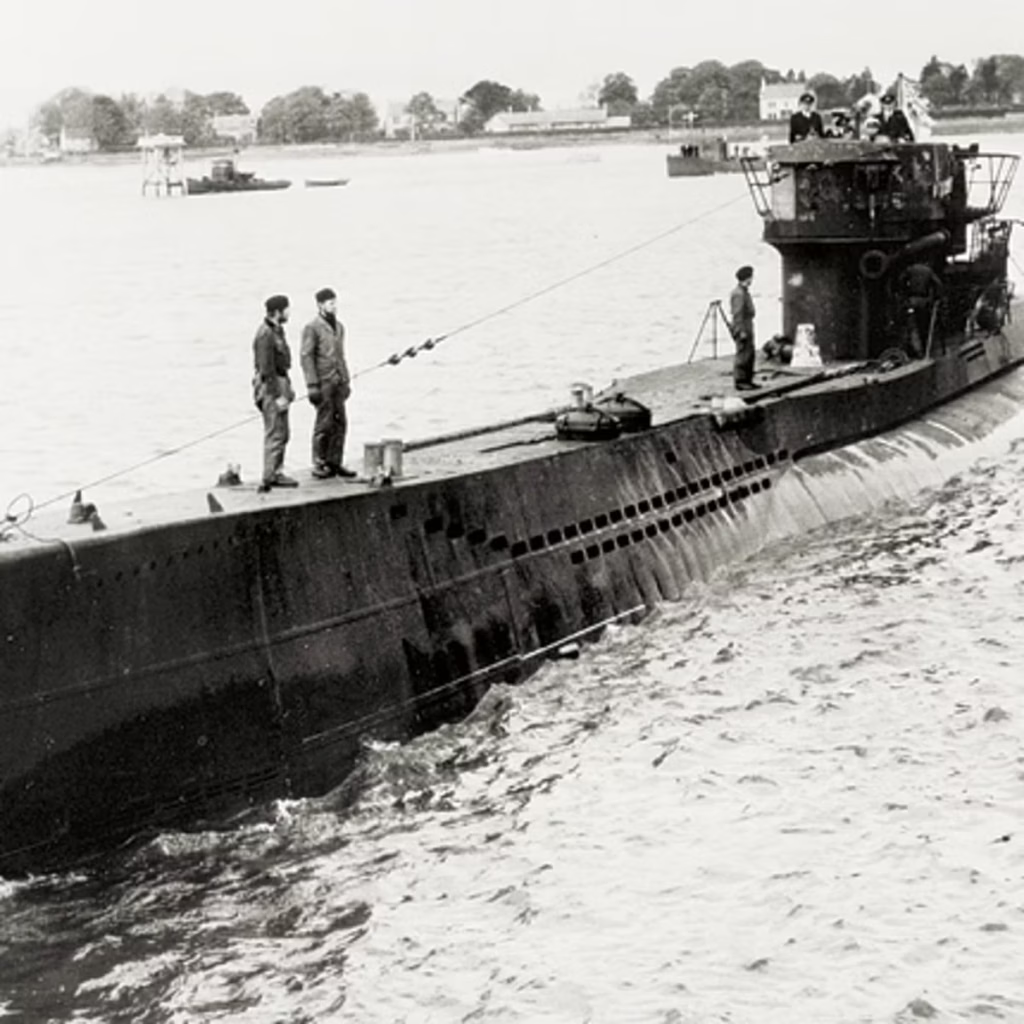
U-boats were told to give up at certain places where they could be safely taken into Allied custody. Most of the places where people surrendered were in northern Europe, especially in the waters around the UK, Norway, and the North Sea. The naval base at Loch Eriboll, in the north of Scotland, was one of the most famous places for surrender. German U-boats Surrender
Loch Eriboll, a quiet bay in the Scottish Highlands, became the main place where U boats met. The German submarines, which had been based in ports all over Europe, were told to go to Loch Eriboll to officially give up. This place was chosen because it was fairly safe and made it easy to keep an eye on the U boats. The British already controlled the area, so it was the perfect place to get the surrenders. German U-boats Surrender
Various British and American controlled naval bases were also places where U boats could surrender. Some U-boats, especially those that were already in Norway, were told to sail to specific ports along the Norwegian coast to give themselves up to the Allies.
How Did U-Boat Crews Get Their Orders?
There were many ways for the crews of the German U boats to find out about the order to surrender. At first, the German Navy’s high command sent radio orders telling submarine commanders to stop what they were doing and get ready to give up. But because many U boats were far away and often out of range of communications, the ways these orders were sent weren’t always reliable. German U-boats Surrender
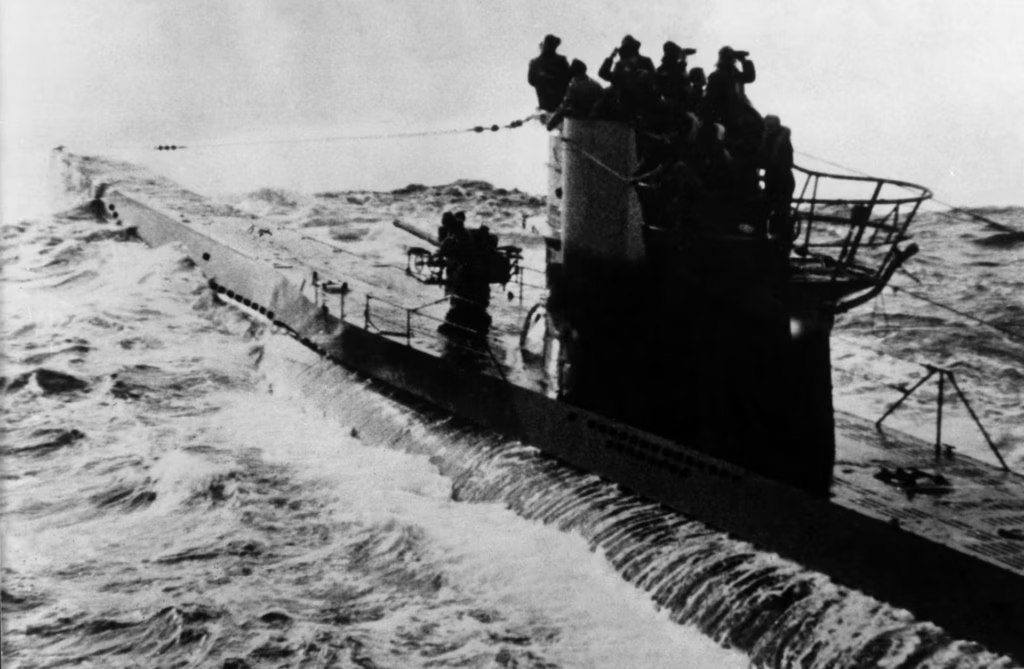
Some U boats learned about the surrender by listening to Allied broadcasts that were intercepted. The Allies made it clear that the war was over through radio messages and leaflets. They also called for an end to hostilities right away. The goal of these broadcasts was to get the crews of German ships, including U boats, to give up. German U-boats Surrender
Also, some U boat crews learned about the surrender from comrades who were coming back. After hearing about Germany’s defeat, U boats that had been involved in operations during the last stages of the war made their way back to base. Once back at port, crews who already knew the orders passed them on to their counterparts, making the surrender process easier.
How to Surrender
When the German U boat crews were told to give up, they had to follow certain rules. The first thing to do was stop all offensive actions, such as firing torpedoes. This was an important step to make sure that no more damage was done during the last days of the war.
After that, the U boats had to go to the designated surrender points, where Allied ships were waiting for them. These ships, which were usually British and American warships, would guide the U boats to safety. After that, the submarines were led into ports, where their crews were arrested.
More than 100 U boats were given up at Loch Eriboll, for example. The Allies stopped the boats in the bay and held their crews for questioning. The surrender went smoothly and in an orderly way, with the German sailors following the orders they were given.
What happened to the surrendered U-boats
The Allies either sank, took apart, or used the U boats again after they gave up. The Allies really wanted to make sure that the Germans or anyone else couldn’t use the U boats again. Because of this, a lot of the surrendered U boats were destroyed, either by sinking them at sea or taking them apart for parts.
The Allies did take a few U boats for more research, though. The post war navy world could benefit from any new technology that these boats had, like better torpedo systems or sonar equipment.
Some U-boats were even used in propaganda after the war to show that Germany had given up and the Allies had won.
Final Thoughts
At the end of World War II, the surrender of German U-boats was a very well-organized event. The process took several weeks because U-boats were spread out across the oceans and commanders had to be told in a number of ways. Most of the U-boats gave up at places like Loch Eriboll in Scotland, but some sailed to Norwegian ports to turn themselves in. Once the crews were told, they followed orders to stop fighting and give their ships to the Allies. The surrender ended the threat of U-boats and marked the end of Nazi Germany’s naval power. The history of World War II and naval warfare still remembers these surrenders as important events.